Thursday, May 18, 2006

The Middle Class & Bourgeoisie in Indonesia

By Perry PADA

The growing expansion of the middle class and the bourgeoisie in Indonesia is an interesting phenomenon to be examined; the important question to address is this: are they an agent of social change? Studies of the Indonesian middle class and bourgeoisie are in their infancy both in terms of theorizing this social category in its Indonesian context and assembling a systematic and comprehensive set of data to support any wide ranging quantitative as well as qualitative conclusion. Most demographic studies have tended to focus on such factors as income raising, urbanization, regional stability, changing age structures and family planning, rather than class stratum and structure, although there has been some work done on the industrial labor force or working class struggles, but it is insufficient to explain the role of the middle class and bourgeoisie within the complexity of Indonesian social and political development.

The main question is what is the impact of the middle class on transformation of Indonesian society and culture? Will they create a greedier and more individualistic or more a community oriented and democratic society? Do they want the rule of law, other than for the purpose of protecting property, civil rights and freedom of speech and the accountability and transparency of government and the bureaucracy? Will they support any regime that protects their new found privilege?

Based on the growing reality of materialism in the era of consumerism which can be clearly seen in many big cities in Indonesia, one can easily jump to the pessimistic conclusion as to the direction of change preferred by the middle class. It is generally agreed that the traditional or middle class’ conception in favor of social justice, human rights and democracy has been replaced by a concern for career ambitions and the cultivation of consumerist materialistic lifestyles. Therefore, it is no wonder that the many night clubs are growing fast, Elite clubs, the have clubs and the like are frequently seen in the city across the country -- the so called upper level society lifestyle is becoming the dream to be achieved for the emerging middle class. At this juncture, the new middle class, it is argued, is merely prepared to fight for narrow personalistic interests devoid of social ideals. This is not surprising, according to many of the commentators, given that the existing middle class is clearly not autonomous in term of its relation to the state system and market influences. The emerging society with its capitalist ideology therefore cannot be avoided in Indonesia, or can it? They only project their opportunities in terms of improving their position within the channels of the state institutions and within the confines of its ideology.

Barrington Moore’s dictum, ‘no bourgeoisie’, no democracy’ may well be true, but it doesn’t follow that the presence of the bourgeoisie necessary implies liberal democracy or that this class will support democratic reform in all circumstances. The Indonesian bourgeoisie differs from Barrington Moore’s notion. The bourgeoisie in Indonesia found its interest embedded in state and market regimes. Additionally, in Indonesia, the potential of the bourgeoisie to establish itself as the ruling class is limited because the state is dominated by Indonesian conglomerates whose public political and social rule is dictated by their own interests and ambition.

Employing Moore’s idea concerning the ability of the bourgeoisie to initiate change, one may pessimistically conclude because it is difficult to envisage them as standing for some redistribution of wealth in Indonesia. From the socio-economic perspective, big oligarch business tends to support their own social class while seeking support from the state/government policy thereby excluding other voices. A big part of oligarch business in Indonesia is not native either in people or in resources and therefore they do not have the inclination to pursue traditionally critical politics. On the other hand the native businessmen whose growth flourishes in Indonesia usually have a link to power. They do not have any interest to change the system because they benefit from it. Another group can be found among the workers, but without sufficient strength to lead a movement for change. The clear reason is that the Indonesian working class is voiceless due to its social vulnerability.

It can also be stated that the Indonesian class structure is unfavorable to real democracy, but at best can be characterized as engaged in procedural democracy of general elections or the existing pluralism of political parties and the long list of formalistic procedures. The independent bourgeoisie and the working class, that have historically been associated with the rise of democracy, are small and relatively powerless in Indonesia. The relatively low level of urbanization and industrialization -- two-thirds of the population earn a living from agricultural activities means that the middle and working classes are relatively undeveloped. This is a problem as history validates the view that it is the working class and sections of the middle class who have been most inclined to the democratic process. The business class in Indonesia is also said to be highly dependent on state power while deeply dependent to overseas credit or donors. A compounding problem is that key components of the business class are ethnic Chinese, who as a minority are politically vulnerable and therefore even more dependent on state protection.

The middle class and bourgeoisie have been heavily dependent upon the state for jobs, careers, contracts and monopolies and more broadly, as the engine of economic growth. Hence they have been reluctant to upset the balance of power of the state and the ascendancy of the stratum of politico -bureaucrats. In other words, the middle class and the bourgeoisie have not yet established their ascendancy as socially dominant forces autonomous of the state and the market. They still require the financial resources and coercive power of the state to preserve the social order.

Depok, 19 Mei 2006

Read More..

Saturday, April 29, 2006

China’s Foreign Relations : A Historical and Cultural Perspective.


By Perry PADA

One can better understand China’s external relations, even, today, by turning back the pages of history to ancient times. Beginning with Qin dynasty and Han in the 3rd century BC up to the end of Qing dynasty at 19 century, China claim itself as a “Middle Kingdom” ( Zhungguo ), center of the world, especially in Asia. China perceived itself as the only great empire on the Earth, the only civilization and the only culture that really mattered for human being. The emperor or Son of Heaven-represents all man kind, whether Chinese or Barbarian. The emperor was the crucial link the mediator between heaven and earth, and he enjoyed the mandate to rule all men (mandate of Heaven).

The Chinese, therefore, had some good reasons for thinking themselves as the originators and heirs of the only civilization in their world. The Pacific Ocean led only to Japan, itself in culture a pupil and adopter of the Chinese civilization. The immense deserts and steppes beyond the great wall were the home of China’s traditional and ‘savage’ enemies, the Tartars--under many successive names. To the south were tropical jungles and a few centers of emergent civilizations whose cultures, when not directly from China itself, were of Indian origin. The west was barred off by the immense massif mountain of Tibet, largely too high to inhabit and such valleys were permitted settled by ‘savages’.

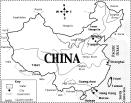
China traditionally divided the world into five majors region. First region, consist of 18 provinces, which is traditional region and completely under China’s control . This region spread out from the big wall in the north to Indochina in the South, and high land in the west to East China Sea.

Second region, consist of Tibet, Sinxiang, Outer Mongolia, Manchuria, shore islands, and some tributary states such as Korea and Annam. China perceived the first and second as the vital region, hence as a region requiring protection.

The third region consist of a large part of tributary states along china’s border such as Ryuku, Burma, Cambodia, Laos, Himalaya, Malaysia, and a part of Kalimantan. Even though this region was claimed as china’s interest region, but the above region much more important for China.

The Fourth region consists of other Asia nations such as India, Pakistan, Papua nuigini, Indonesia, and Iran. And the fifth region, consist of Europe countries, America and Africa. China perceived these nations as barbars and therefore was never treated equally.

With this world order, China thus claimed to a position of dominance and centrality in the Asian states system. This relate to a conception of their land as a middle kingdom, to which adjoining states owed tribute as political and cultural satellites. This order is called a tributary system, which is hierarchically ordered with China as the central power (Zungguo) who arranges that order. With this order, it is not weird that Chinese people perceived themselves as more intelligent, more civilize and more capable than other nations.

Further more, it is not simply that Chinese regarded their culture as superior in a material and aesthetic sense; they believe it to be superior, and universally valid. Though non Chinese people were not forced to acknowledge and adopt Chinese superiority, they were somewhat despised if they neglected the opportunity. Hence traditional China was based on the assumptions that it was logical for all people to follow its values; also China had a special role to protect these values. These assumptions still sustain contemporary China’s Communist Party (CCP) leaders to the present.

The root of culture and ideology

The Chinese image of world order is also colored by the assumptions, values and beliefs of the Confucian moral order. Indeed, the traditional Chinese image of world order was no more than a corollary of the Chinese image of internal order, and thus really an extended projection of its self image. Hence, the chief concern of China’s traditional foreign policy centered upon the ways and means of making diplomatic practice conform to the idealized self image.

The essence of Chinese world order was sinocentric cosmology. China perceived herself to the center of human civilization - hence the name of middle kingdom and the son of heaven as the conception to have the right to reign and rule over all human affairs. Although pre-Confucian in origin, the notion a universal state ruled by a universal king developed and culminated in the state orthodoxy of the Confucian order. In the orthodox Confucian conception, the political status quo has to be preserved in the Chinese world order through a universal symbolization of harmony that was hierarchical and anti egalitarian, based on sex, kinship, age and social function. Confucianism heavy lays stress on the doctrine of superordination-subordination in the five relationships as well as in the distinction between the superior men who work with their brains and the inferior men who labor with their muscles. Thus, because of the world of Chinese as a reflection of domestic stratification, the hierarchical of social order at home provided an absolute criterion for conceptualizing China’s relations with non-Chinese states.

Limited contacts with west and the Byzantine world during the Tang Dynasty (618-906) merely confirmed the rightness of the sinocentric image. Even the Buddhist invasion, the most serious foreign challenge to Chinese culture until modern times, failed to modify Chinese perceptions. The Indian world view as expresses in Buddhism was devoid of political imperative. While Buddhism exerted a substantial and lasting influence on art and religious thought in traditional China, it had little political impact on Chinese cosmology. Even the alien conquerors--Yuan and Ch’ing-- contributed to reinforcing the sinocentric world order or in other word we may say as “signified “process or sinicization.

Western Penetration and treaty system

In the beginning 19th century, British, French, Dutch and US were the nations dealing trade with China, although their trade activities were limited to a certain region and only contact with the government was allowed. At that time western trader viewed that opium is the only commodity attracting Chinese. Therefore their activities concentrated on this commodity.

War between China and British (opium war) in 1839-1842 and along with the very fast intrusion of technology, culture, economy and politic penetration, challenged the traditional pattern in china . Qing dynasty begin to be weaken because the inability of the king to overcome the repression of domestic rebellion and west penetration in the ports area.

The defeat suffered by China in the opium war ushered in a new era of Sino-western relations. The age old tribute system was dealt a heavy blow, and a new treaty system was inaugurated by four “peace treaties” signed between Chinese and western powers. Taken together these treaties established a general frame work for commercial and diplomatic relations between Chinese and the west. At the end of 19 century, western ambition increased. China’s ports were taken over by them such as Honking and Weihaiwei to British, Qiangdao to Germany, Macao to Portugal, Guang zhouwan to French and Dahlian to Rusia. Most part of Chinese territory were claimed by western countries and were under their influence. To the north, Tsarist Rusia tried to establish its control in Manchurian and Xianjiang. Russia also succeeded to have Maritime province in Vladivostok in 1860. Through series of treaties imposed by western , particularly a series of peace treaties signed at Tiensin, however , opened “a pandora’s box” for the traditional Chinese image of world order. China unwillingly accepted and recognized the western nations in their territory widely and freely. This experience was to shape the course of Chinese international relations.

Chinese history as I elaborated above contributed a strong felling for modern Chinese leaders concerning China’s status and national integration. In fact the history of China, their belief, culture and values shaped China’s as a great nation as we see today. Chinese Communist leaders has a highly national consciousness towards their glorious and bitterness of the past. According to Mao, “China is a nation who has glorious tradition. Even though sometimes that glory is affected by Barbarian, we always succeeded to defeat them with revolutionary facilities”. Regarding the unity and national integration, in 1939, Mao Zedong expressed the same felling by saying that “Imperialist force had seized china’s territory”, such as Korea, Taiwan, Rukyu islands, Pescadores, Port Arthur, Burma, Nepal, Honking, Annam, and Macao. Mao gave his promise that “ Chinese will not be humiliated by others any more and we will struggle to the next eight years, maybe ten years, or more. And, we will show to the world, what kind of nation we are”. Therefore, the assumptions about the lost territories proved that the middle kingdom conception and tributary system still ingrained in the thinking China communist leaders.

Even though traditional aspects have a great influence, China image of the world is very determined by the characteristic of Chinese communism. This characteristic (especially Mao’s though) combined with the root of culture subsequently creates China communist image of the world order.

(1) Harry Harding, China and Northeast Asia: The Political dimension (New York: University Press of America),p.5-6.

(ii) C.P. Fritzgerald, “Chinese view the world” Year book of World Affairs, 1981, p.156.

(iii) Harding, China and Northeast Asia, p.5.

(iv) Michael H. Hunt, Chinese Foreign Policy in Historical Perspective” in Harry Harding, China Foreign Relation 1980s (New Heaven : Yale University Press,1984),p.5.

(v) North, The foreign relations,p.54.

(vi) John Crammer-Byng, “The Chinese View of Their Place in the world” A Historical Perpective,” China Quarterly, No.53 (January/Maret, 1973).p.68.

(vii) Samuel S.Kim, China, The United Nations, and the World order (New Jersey:Princeton University Press, 1979).p.20.

(viii) North, The Foreign Relations, p. 54-55.

(ix) Paul H. Clyde, The Far East (New Jersey: Prentice Hall,1958),p.21

(x) Harding, China and Northeast Asia.,p.55-56

(xi) Kim, China, the United Nations.,p.36

(xii) North, The Foreign Relations,p.56.

(xiii) See, A.Doak Barnett, Communist China and Asia: A challange to Amrican Policy (New York:Random House,1960),p.76.

(xiv) As quoted by Liu from China Digest (October 5,1946) in China as A nuclear Power.,p.15

Read More..

Foreign Policy Conception: A Strategic Thinking


By Perry PADA

I assume that strategic thinking is one of the most difficult areas in the International Relations. This is because of the obscure understanding of the strategic thinking conception itself and also because there is little study of this area. Strategic thinking can be focused on military aspects, which covered some issues like military doctrine, military science, or strategy. Anatol Rapport in “critique of strategic thinking” does not give a clear understanding of the concept of strategic thinking. According to Rapport, Strategic thinking is a variant of rational thinking and he also argued that strategic thinking usually can be seen as a theory of rational decision making through game theory calculation.

For the purpose of this study, the concept of strategic thinking, as the main concept, can be interpreted as “the ability and methodology of a nation to control its international environment’s aspects”. With this definition, strategic thinking not only encompasses ideas and values as the result of the interaction of history, ideology and culture of a nation, but it also entails a formulation concerning its relevancy toward strategy, doctrine, policy and action.

Through the above loose concept of strategic thinking, the analytical framework used by this study can be divided into four segments. They are : (1) Identification of “World view “ and definition of situation (2) formulation of national strategy (3) strategic doctrine and security policy and (4) military policy.

As a concept world view means specifically a nation ’s image of the universe and its role in it , its recorded history and recollection of past experience , its long range goals or sense of purpose , and whatever values and beliefs it hold about human relations. According to Robert North this world view is significantly determined by the aspects of their history, culture, ideology, and special principles and objectives.In other words, we also can interpret this image as a “belief system“. In the work of Herman there are 4 (four) personal characteristics relate to foreign policy making. Namely beliefs, motives, decision style, and interpersonal style. In the context of the study foreign policy, “belief” represents the leader’s fundamental assumptions about the world or his international environment. Such belief can be very general, as, for example, a political leader’s notions about his ability to control events in his life, or they can be more specific, as, for example, political leader’s notions about their ability to shape political events of his nation.

Image obtained from a world view may serve as (1) a lens through which we view the outside world or reality, and also as a filter through which the message from the outside world is processed -that is, accepted or rejected with or without modification. (2). a scale of evaluation whereby policy makers interpret the meaning of the message received. (3). to prescribe a proper line of action to be followed based on (1) and (2). In short, it performs cognitive, evaluative and receptive functions. Thus, every nation has an image of its friends and its foes. Every nation has an image of the outside world or the international system; this is called its definition situation. Every nation has an image of how world affairs should be managed and what issues should take precedence. To understand and explain why a nation behaves the way it often does , therefore, we need to take a close look at that nation’s image of itself and of the world that we called world view.

The world view will lead a nation to determine three things, namely: 1. recognition of a stimulus, 2. a perception of the need and 3. Definition of situation. According to Brady these three things have to occur before situation exists for foreign policy decision makers. When a stimulus is perceived to precipitate a problem, there is an occasion for decision. Interpretation of the problem involves the decision maker in ascertaining a definition of the situation.

The definition of situation is on how a nation makes a projection of the international system. Hence it is a process in which a nation interprets events and problems. The problems are placed into certain categories and select the most important problems to respond to. In order to analyze the definition of situation, we may concentrate on how decision makers seek out a description of the problem or stimulus and put in perspective. In general, decision makers will tend to seek the sources of problems. Thus, the definition situation becomes a conceptual structure which premises the formulation of foreign policy.

At the level of the formulation of foreign policy, the decision maker must (1) select the purpose to be achieved, (2) mobilize the resources which will be used to achieve the goal and (3) the policy implementation.

A Security policy can be assumed as a part of foreign policy of a nation. The purpose of the policy is to create a condition of national politics and international which can protect the national goal. The security policy has three dimensions, they are: economic policy, military policy and diplomatic policy. Economic policy focuses on resources allocation within the society and economic relationships with other nations.

The military security consist of policies related to armed force, and how a nation use this force and the diplomatic policy focus on diplomatic relationship among nations.

Nation, at the certain point, will have a characteristic along with the different history, culture, and ideology among nations.

Therefore, as mentioned earlier the study of strategic thinking is difficult because of the range of aspects contributed to it. However, one can start understanding the underlying of strategic thinking from historical and cultural aspects, because I believe, in some extend, through this starting point, we are able to analyze what the underlying belief and values are which lead decision makers to formulate a certain policy

Montreal

1. George Tan Eng Bok, “Strategic Doctrine” in Geral Segald and William T.Tow, ed., Chinese Defense Policy (London:MacMillan,1984),p.3-17.

2 . Anatol Rapport, “Critique of Strategic Thinking,” in Naomi Resenbaum,ed., Readings on the International Political System (New Jersey;Prantice Hall,1970),201-228.

3. Robert C.North, The Foreign Relations of China (Massachusetts; Duxburry Press,1978),p.7

4. Margaret G.Herman In Maurice A, East ,et.all, “Why Nation Acts:Theoritical Perspective for comparative Foreign Policy Studies (Baverly Hills:Sage Publication,1978),p.59.

5. Samuel S.Kim, China, the United Nations, and World Order (New Jersey:Princeton University Press, 1979).P.13-14.

6. See, Linda P. Brady,?The situation and Foreign Policy in East, etall, “Why Nations Act”, p.175-176.

7. See, Howard H. Tanter, Foreign Policy Analysis: A Comperative and Conceptual Approach (Columbus: Charles A. Merill, 1974),p.3.

8. See for example, Daniel J. Kaufmann et.all., US National Security (Lexington, Mass: Lexington Books, 1985),p.4.

Read More..

Tuesday, April 25, 2006

The New Global Ideological Order


by Prof. Sam J. Noumoff - McGill University - [Contributor]

"We stand on the shoulders of those who preceded us" This statement holds as much truth today, as when it was first uttered some decades ago. The new emerges from the old, either as the maturing of an embryonic idea from an earlier era, or as the expression of a negation from that earlier era phrased as an alternative. What is new, therefore, is not the idea itself but rather the critical mass of power which patronizes the idea. We are truly entering an epoch of global ideological struggle for hegemony. Given the distribution, or more accurately lack thereof, of global power it is incumbent upon us to explore the strategic ideas emanating from the current U. S. power holders.

While trans-continental U.S. expansion is well known, driving as it did the indigenous population into a continuous "homelands" existence, it is essential for us to recall, that the continental appetite was not satiated until 50% of Mexico was detached and digested, leaving it halved with an appendage of what is now called "Baja{lower} California" as a morsel to the Mexicans. Non-contiguous expansion is easily dated to the U.S. victory over Spain more than a century ago in the "Spanish-American War", with the U.S. appropriation of selected Spanish colonies in the Caribbean and the Philippines. This was followed by the U.S. elbowing its way into other lucrative parts of the world under the slogan of the "open door", which translated into a realignment of market access in conformity with its newly flowing national hormones. At the conclusion of the Second World War, the continental United States remained untouched by the ravages experienced by Europe and Asia propelled itself into pre-eminence, challenged only by the existence of an alternative in the USSR, China and other socialist countries, while remaining the "leader" of the only global system. With the implosion of the Soviet Union and Eastern Europe in the late 1980s, the stage was set for the next phase of re-alignment.

There are a number of marker issues which subsequently emerged which honed the process which we now witness in its full blown expression; Saddam's invasion of Kuwait, and Bush-The-Father's limited, albeit high technology response; and the U.S. bombing of the Chinese Embassy in Belgrade during the process of dismantling Yugoslavia. It was anticipated that Chinese action would be limited to rhetoric, in the absence of any effective action; the "Paper Panda" would be exposed as at least currently powerless. The final marker occurred during the Clinton Administration in 1994 when plans were afoot to preemptively strike North Korea's nuclear installations, which was thwarted only by Jimmy Carter's out maneuvering of the Clinton "Hawks" by his presence in Pyongyang and his T.V. announcement that he had obtained a positive agreement from the North Korean government. The impulse towards the use of preemption, consequently, is not new to the current U.S. administration.
With all of this as background we come to the present. With the recent war against Saddam by Bush-The-Son, we witness the culmination of the military demonstration effect of U. S. hegemonic power; the world is now, under the rubric of the "Bush Doctrine", to be terrorized into seeking "freedom through the market". Is their an ideology which under-girds this Doctrine? Clearly the answer is yes, visualized through the Edvard Munch painting the Scream.

While the scions of this ideology trace their ancestral tribal home to the Administration of Ronald Reagan, the contemporary residence is the Project for the New American Century, an institution founded in the Spring of 1997. The initial Statement of Principle was signed by twenty-five persons, including the current Vice-President, the current Secretary of Defense, a former Vice-President, the brother of the current President, an assortment of Defense and State Department ideologues, five academics, one theologian, two publishers, one Afghan Muslim who currently represents the U.S. in Afghanistan, a former "Drug Czar", a former White House Director of Policy Development, and the ex-head of the Committee for a Free World. This core group reflects the soul of the current Administration, who six years ago elaborated their policy manifesto. Since taking power, one among them was the major conduit for U.S. government funds passed to the organizers of the abortive junta which attempted to overthrow the democratically elected President Chavez of Venezuela, another remains a proponent of "helping the Chinese to liberate themselves from communist despotism", while yet a third is dedicated to the promotion of "Christian ideology". Among them too resides a person who plead guilty to lying before the U.S. Congress. Their Manifesto contains the following main features:

(1) As the preeminent world power, the U. S. must have the resolve to shape the new century favorable to American principles and interests.

(2) Reestablish the Reagan principle of a strong military ready to met all challenges in the promotion of American principles abroad, and accepts the United States' global responsibilities. Failure to do so invites challenges to U.S. interests.

(3) Four immediate priorities are: (1) Increase the military (2) Challenge regimes hostile to U.S. interests and values (3) Promote the cause of global political and economic freedom (4) Extend an international order friendly to U.S. security, prosperity and principles.

The full articulation of their policy came with the State of the Union "axis-of-evil" address by Bush-the-Son on 29 January 2002, and the comments on it from the leaders of the Project for the New American Century. Gary Schitt and Tom Donnelley, issued a Memorandum reasserting that the U.S. has a greater purpose, than merely the fight against terrorism. It was "an opportunity to spread American political principles, especially into the Muslim world". While Muslims were seen as the initial target, Schmitt and Donneley went on to cite from the address that 'No nation is exempt [from the] non-negotiable demands of liberty, law and justice". The Memorandum concluded with the following; "lasting peace and security is to be won and preserved by asserting both U.S. military strength and American political principles". The day after the Memo was issued, William Kristol, current Head of the Project and Editor of the Weekly Standard, published an article in The Washington Post which elaborated the trajectory of American thinking.

The U.S. moved from fighting terrorists, to terror-loving regimes, to tyranny in general, especially hostile tyrannies {emphasis added}, to regime change by military force in the urgent cases and regime change by diplomatic and political means in those non urgent ones. I can only assume given this optic on regime change, should diplomatic and political means not succeed, the military option is always available. Can the U.S. pursue this global policy of Roman Legate alone? The answer from the Project is expressed yet again in the liberal (in the American context) Washington Post in mid-September of 2002. Robert Kagan, a Project leader, described the multilateralism of Secretary of State Colin Powell and former Secretary of State James Baker, as "instrumental multilateralists", that is people who take the view that "the United States should seek the approval of the U.N. Security Council [for military action}. Then if the Security Council refuses, the United States can invade anyway". Kagan went on to say, "If it [the Security Council] makes the right recommendation, it strengthens your case, if not, you can always ignore it" "In an age of American hegemony, it will be multilateralism, American style." Among the more bizarre and frightening of the Reagan legacies, is the confounding of reality with cinema, unfortunately not limited to Reagan himself, who was known for, upon occasion, confusing the two. Towards the end of March last, Gary Schmitt Executive Director of the Project, expressed in The Los Angeles Times his confusion when he incredibly likened the present world to the Gary Cooper film, "High Noon".

"The townspeople [in the movie] are more than happy to live in peace brought by his {Garry Cooper's character Marshall Wil Kane} law enforcement, but are nervous and resentful when the bad guys come back to town looking for him, to enact their revenge. The residents shortsightedly believe that if the marshal would just leave town, there would be no trouble. Of course the reverse is true. Without Kane to protect them, the town would quickly fall into an anarchic state, paralyzed by ruthless gunslingers."

To grasp the fuller extent of the so called "Bush Doctrine" let us look at the National Security Strategy published last September. In this 25 page document we find the following:

(1) There is only one sustainable true and right model for all peoples and countries, and that is based on "freedom, democracy and free enterprise" and is the non-negotiable demand from which no nation is exempt.
(2) The U.S. will extend the peace on every continent and promote economic freedom beyond America's shores
(3) The U.S. will act against threats before they are formed and act alone and preemptively, as the best defense is an offense, recognizing that enemies can not be permitted to strike first.
(4) Russia is in transition to a society which hopefully will conform to U.S. values, and China will in time recognize that this is the only path to national greatness
(5) The concept in international law of "imminent threat" must be adapted to meet the danger of current adversaries
(6) Rogue states who hate the U.S. and everything for which it stands must be stopped
(7) Poverty is not the source of terrorism
(8) U.S. strategy will be based on a "distinctly American internationalism"
(9) When openings arrive the U.S. can encourage [regime] change (10) The United States will rid the world of evil
(11) The U.S. must dissuade any future military competition and develop access arrangements for long distance deployment of U.S. forces
(12) The U.S. will continue to oppose the application of the International Criminal Court to its personnel in the discharge of its global commitments.

There is a certain familiar and shuddering echo of this Manichean Doctrine traceable to the 1930s. The world is divided into two camps, good and evil and the national mission of the U.S. is to rise up and in the name of [Christian] civilization, combat and destroy evil, with a "coalition of the willing" if possible, but alone if necessary. There is but one truth and the U.S. is its embodiment, with a duty and responsibility to insure by whatever means necessary that the rest of the world accept this truth. Whatever norms of international law exist, be it the International Criminal Court or precedents in defining "imminent attack", are to be merely bent to the instrumentalism of American hegemonic power. Presumably any state which may develop a credible military challenge to the U.S. will fall on the other side of the line and will be preemptively neutralized. How thinly disguised is this proposition?

Ideologies emerge from the pen of ideologues. We have seen above who these people are and the values which they represent. They have formulated an Imperial Doctrine in contemptuous disregard for the rest of humanity, and the richness of our collective historical diversity. They are the new talibs, quintessentially arrogant and self-righteous, who hopefully shall meet the same fate as did the Taliban, at the hands of the rest of the world.

www.globalresearch.ca 7 May 2003
The URL of this article is: http://globalresearch.ca/articles/NOU305A.html
The writer is the Author's Professor of Political Science at McGill University

Read More..

Saturday, April 22, 2006

Kebebasan Pers dan Kegagalan Pemberdayaan Rakyat

By Perry PADA

[Dimuat dalam Majalah Pledoi No.3/Mei 2006]

Sejarah suram pers nasional dibawah pemerintahan Orde Baru telah menempatkan pers sebagai bagian dari ‘ideological state apparatus’ yang berperan dalam proses menjaga stabilitas, legitimasi dan eksistensi rezim. Dengan kata lain, pers telah difungsikan menjadi salah satu alat ampuh untuk melanggengkan posisi para elite dalam pemerintahan Orde Baru (‘the media serve the ends of a dominant’).

Salah satu upaya rekayasa konstitusional untuk mencapai tujuan tersebut antara lain dilaksanakan melalui undang-undang Pers No.11 tahun 1966, yang menyebutkan bahwa surat kabar atau majalah hanya dapat diterbitkan jika terlebih dahulu memperoleh surat ijin terbit (SIT) dari Pemerintah. Rumusan tersebut dengan jelas menggambarkan betapa kuatnya kekuasaan pemerintah Orde Baru - Eksekutif dalam mengontrol seluruh pilar demokrasi yaitu lembaga Legislative dan Judikatif serta Pers itulah gambaran singkat wajah pers nasional pada saat itu.

Jakob Oetama (2001), menggambarkan bahwa selama 30 tahun hingga menjelang perubahan politik pada medio Mei 1998 pers yang lulus seleksi ketat dengan monopoli kriteria rezim Orde Baru hanya berjumlah 289 buah dan belum setahun usia reformasi 1999 jumlah surat ijin terbit baru adalah 582 buah, dua kali lipat dibandingkan dalam hitungan 30 tahun. Berbeda dengan hitungan Angela Romano (2002) yang menyebutkan bahwa: It is estimated that between the time of Soeharto resignation and the September 1999 passage of law No.40 on the Press, the Department of Information handed out 1800 to 2000 licences.

Daniel Dhakadie (1991) dalam penelitiannya mengenai sejarah pers di Indonesia menggambarkan fenomena ini sebagai: Like a swinging pendulum, press freedom in Indonesia moves from one extreme to another. It all depends on how the country is run in each particular period. When the degree of state control runs high, press freedom weakens. When the Government’s grip is loosened, press freedom gets stronger.

Apakah perubahan rezim dan lonjakan pers telah mencerahkan wajah pers nasional kita? Fakta yang tidak dapat disangkal, meningkatnya jumlah media yang cukup signifikan tersebut adalah indikator awal dari bergulirnya proses demokratisasi. Tetapi tentunya analisa yang baik tidak dapat berhenti disitu, karena penilaian terhadap proses demokrasi adalah kompleks dan multi dimensional dan tidak dapat hanya dilihat dari kuantitas lonjakan media semata, faktor-faktor lainnya seperti peningkatan ekonomi, prosentasi tingkat masyarakat yang hidup dibawah garis kemiskinan, pendidikan, kesadaran politik, pertumbuhan tingkat kemandirian kelas menengah juga merupakan parameter penting dan kontribusi terhadap proses demokratisasi dan ukuran maturitas.

Oleh karena itu, persoalan sebenarnya bukan hanya terletak pada masalah kemudahan, kebebasan, perijinan atau sensor/kontrol pers tetapi juga yang harus menjadi perhatiannya adalah sejauh mana kebebasan pers memberikan dampak terhadap perubahan struktur sosial yang ada (stage of social development of any societies)?.

Kebebasan pers : seperti apa?

Adalah Miezeslaw Kafel (1958) yang mengatakan system pers dan system politik di sebuah negara biasanya saling mewarnai (interdependent). Menurutnya bila peran pers meningkat, maka pers menjadi variabel yang berpengaruh terhadap perubahan sosial politik yaitu terjadi perubahan kondisi masyarakat dan kehidupan politik. Dengan kata lain idealnya dengan adanya kehidupan pers yang bebas, diharapkan proses demokratisasi dapat berkembang secara sehat dan berangsur-angsur diharapkan publik mulai menyadari hak-hak sipil mereka antara lain hak untuk mengemukakan pikiran, pendapat, dan berekspresi secara bebas.

Peniliti media AS, Timothy E. Cook (1998) dalam salah satu karyanya yaitu “Governing with the News” lebih ekstrim menggambarkan perkembangan pers sebagai bentuk baru dari institusi politik dan lebih jauh berpendapat terjadi perubahan fungsi para jurnalis yaitu dapat berperan aktif sebagai aktor-aktor politik yang dapat membentuk dan mempengaruhi jalannya system politik. Berbeda dengan Robert W. McChesney(1997) yang melontarkan peringatan positif yakni tidak selalu kebebasan pers akan melahirkan demokrasi karena yang terjadi dapat sebaliknya yaitu semakin banyak media semakin buruk wajah demokrasi--“Rich media, poor democracy” Asumsi menarik digambarkan oleh Chesney yaitu disamping korelasi positifnya, terdapat korelasi negatif antara kebebasan pers dan proses demokratisasi. Sebagai contoh, di Amerika Serikat, di era kemenangan rezim pasar yang begitu gemilang, media dapat mendikte preferensi publik tentang banyak hal antara lain barang kebutuhan, pola konsumsi, gaya hidup, bahkan sampai pada preferensi politis seperti figure pemimpin dan partai yang menjanjikan. Situasi demikian mengakibatkan keberpihakan pers sangat sulit dihindari (negative freedom).

Tidak dapat dihindari bahwa dengan longgarnya state control secara otomatis beralih kepada market regulation dan tampaknya paradigma ini belum berubah dan tidak tersentuh oleh gejolak tuntutan reformasi di Indonesia. Oleh sebab itu, dalam era pasar bebas maka istilah invisible hand mekanisme pasar yaitu kaidah permintaan dan penawaran, logika sirkuit modal, rasionalitas maksimalisasi produksi dan konsumsi merupakan prioritas dan secara sadar atau tidak sadar diterima oleh masyarakat luas sebagai bagian dari liberalisasi politik dan keberhasilan reformasi.

Fenomena ini dapat terlihat dari kebebasan pers pasca Orde Baru yang oleh sebagian besar pengamat media masih dianggap semakin mengarah kepada kepentingan ekspansi dan akumulasi modal dan belum dapat berfungsi sebagai alat untuk mewujudkan ruang publik yang kondusif bagi pemberdayaan aspek-aspek kehidupan rakyat kecil atau lebih popular dengan ‘proyek pencerahan’. Terjadi invisible control yang sulit terdeteksi oleh masyarakat marjinal bahwa sebenarnya dibalik penyampaian pesan dan image terjadi penggiringan pemahaman masyarakat (manufacturing consent) yang berpihak kepada kelas elit melalui pers yang bebas. Sehingga pada akhirnya dikuatirkan kebebasan pers tersebut akan digiring oleh selera pasar dan kepentingan politik sesaat serta akumulasi modal sehingga kualitas dalam kerangka proses pendidikan demokrasi menjadi semakin rendah dan lemah (public depolitization).

Kebebasan Pers : mau kemana?

Dilematis bagi industri pers adalah antara lain: pertama, pers tidak lagi bernuansa pembangunan tetapi lebih terseret oleh masalah survival sehingga fungsi framing pers atau pemilihan dan pemilahan isu cenderung memenuhi permintaan pasar khususnya pasar iklan dalam pengertian yang luas termasuk iklan politik agar mampu bertahan (Selected and ordered framing). Media yang menyuarakan dialog publik tanpa memperhatikan ‘selera publik’ yang sedang trend saat itu tentunya sulit untuk bertahan lama. Kedua, tidak dapat disangkal pula bahwa framing isu yang memiliki arti signifikan dalam kerangka transparansi dan pembentukan image juga tidak dapat bertentangan dengan ekspansi dan akumulasi modal para pemilik modal dan elit politik. Ketiga, isu-isu sosial yang tidak memiliki nilai jual cenderung akan dikesampingkan oleh pers atau diolah oleh pers menjadi suatu komiditi garapan atau strategi.

Jarang pers menggarap isu pada segmen masyarakat kecil yang hidup bertani di kaki gunung atau nelayan yang berjuang ditengah laut atau kehidupan toleransi umat beragama yang subur, tetapi lebih senang mencover isu konflik dan krisis atau public figure yang akan diminati oleh para politisi, free rider, pemilik modal atau kelas menengah yang melihatnya entah sebagai ancaman, potensi keuntungan, investasi politik atau adjustment strategy dalam meningkatkan kehidupan sosial-politiknya. Sangat jarang media berperan sebagai alat untuk membangunan kesadaran politik rakyat atau pembentukan opini publik terhadap suatu isu kebijakan publik, kalaupun ada tidak sebanding dengan tingkat pertumbuhannya.

Tiga syarat utama terbentuknya masyarakat yang demokratis, yang harus dipakai sebagai indikator kebebasan pers yang mampu memberikan dampak langsung terhadap perubahan kehidupan sosial ekonomi dan politik masyarakat, adalah:

  • Secara berangsur mempersempit ketimpangan sosial dalam masyarakat;
  • Terbentuknya kesadaran hukum dan politik kolektif untuk menempatkan kepentingan publik diatas kepentingan pribadi dan
  • Adanya komunikasi politik yang memungkinkan masyarakat terlibat aktif dalam proses pembentukan kebijakan publik dengan demikian selanjutnya diharapkan dapat membentuk suatu ruang publik yang demokratis (public sphere).

Namun didalam suasana kompetisi dan liberalisasi yang ditandai dengan pertumbuhan Industrialisasi dan komersialisasi pers, dikuatirkan pers tidak dapat sepenuhnya merespon ketiga syarat tersebut diatas. Dalam tradisi pemikiran sosialis sebagai nilai penyeimbang asas kapitalis, liberalisasi dan pluralisasi tidak selalu berdampak positif karena kompetisi cenderung mengeksploitir dan menggunakan rakyat – akar rumput - sebagai komoditas yang tidak mampu ikut dalam kompetisi pasar. Sehingga tampaknya kebebasan pers masih sepenuhnya belum bisa diharapkan berfungsi sebagai transformator perubahan struktur sosial dalam kehidupan masyarakat kita.

Sebenarnya, potensi demokratis media terutama terletak pada ukuran penciptaan ruang publik. Suatu area dimana seluruh anggota masyarakat dapat berinteraksi, bertukar pendapat dan berdebat tentang masalah-masalah publik yang kemudian diharapkan terakumulasi secara positif menjadi public opinion dan akhirnya suatu collective ideas and action untuk mendukung atau menolak public policy, tanpa merisaukan intervensi penguasa. Konsep ruang publik menuntut adanya transparansi dan debat publik mengenai kebijakan pemerintah yang menyangkut kehidupan orang banyak dan isu-isu lainnya dari setiap level masyarakat. Tetapi sayangnya, sejak mengalirnya semangat reformasi dan transparansi diberbagai bidang, ruang-ruang publik semakin kabur dan tenggelam oleh retorika politik yang ikut dalam konotasi trend demokrasi dengan penafsirannya masing-masing dan lebih parah lagi hanyut terbawa oleh selera pasar.

Pada saat Orde Baru berkuasa, gambaran mengenai keberadaan ruang public adalah jelas, karena ruang publik memang tidak pernah muncul karena tenggelam dalam proyek propaganda. Namun pada saat rezim baru datang dan berganti, tidak terdapat perubahan yang signifikan karena ruang publik tetap tidak muncul tetapi industri dan komersialisasi berita yang semakin tampak. Berita menjadi pesanan dan para pemred, sadar ataupun tidak, terjebak menjadi elite yang ikut bermain. Berita yang mempunyai nilai jual menjadi perhatian pers dengan standar dan kalkulasi pasar seperti target pembaca dan segmen masyarakat potensi pasar.

Tampaknya, kaidah itu semakin inheren dalam praktek kebebasan pers saat ini. Lihat saja sinetron-sinetron dan tabloid-tabloid yang semakin merjalela. Sehingga sangat disayangkan terkadang fungsi editorial yang seharusnya aktualisasi dari suatu keahlian pers dalam menganalisa realitas sosial terjebak dan terbelenggu dalam kepentingan pasar bebas dan sama sekali tidak memuat upaya peningkatan kesadaran rakyat mengenai dinamika sosial budaya rakyat, tetapi cenderung dipaksakan masuk dalam domain pasar dan komoditas politis dan inilah keanehan yang terjadi di era so-called reformasi yang saat ini kita sedang nikmati.

Jakarta, April 2006

Read More..